Cross-Game Progression Systems: How Layered Incentives Bridge Reel Mechanics With Dealer-Led Encounters Via Flexible Access Routes
Gisela Krause · Jun 12, 2026
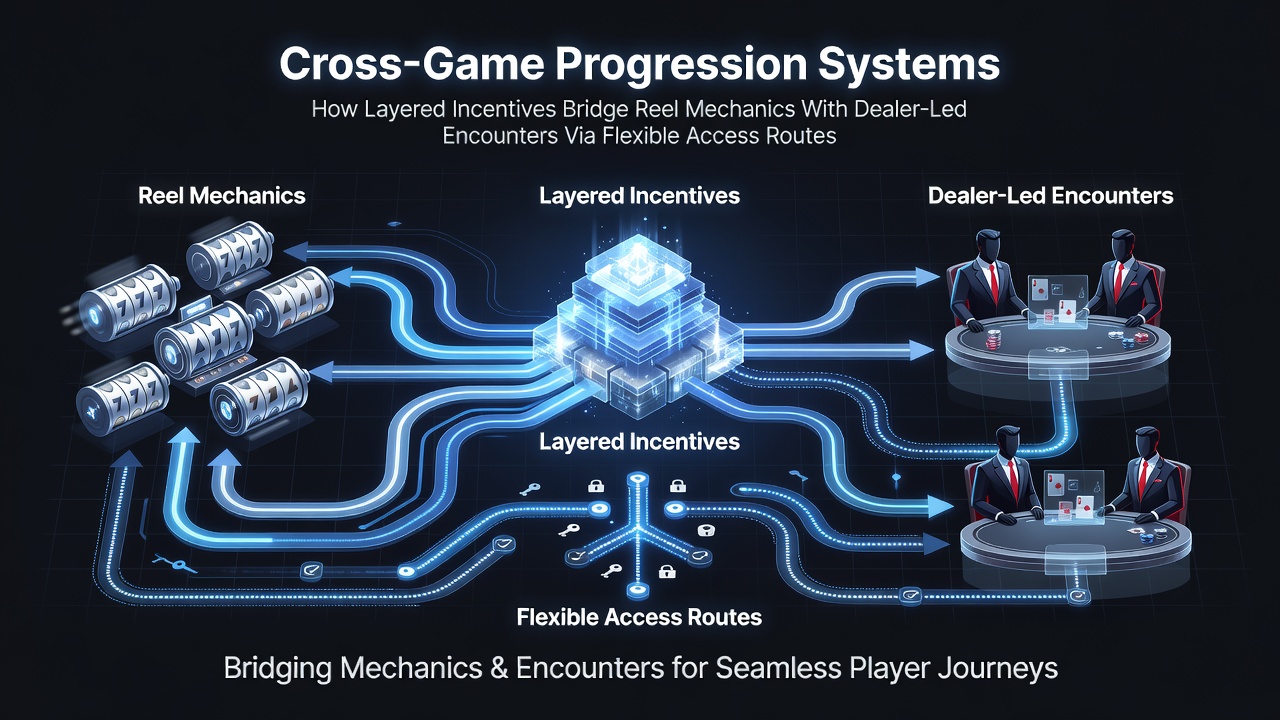
Cross-Game Progression Systems: How Layered Incentives Bridge Reel Mechanics With Dealer-Led Encounters Via Flexible Access Routes
Cross-game progression systems operate by tracking player activity across distinct game categories and carrying forward achievements from reel-based slots into live dealer environments. These frameworks rely on shared progression metrics that convert spins on mechanical reels into points applicable at tables run by real dealers. Operators implement such systems to maintain continuity while players switch between chance-driven mechanics and strategy-oriented encounters.
Mechanics of Layered Incentives
Layered incentives function through tiered reward structures that accumulate value at multiple stages of engagement. A player completing a series of reel spins earns base credits that feed into a secondary layer unlocking dealer table privileges such as reserved seats or modified betting limits. Additional layers activate when milestones combine both game types, creating pathways where slot-derived progress directly influences live session parameters. Research indicates these structures increase session duration because rewards remain accessible regardless of the chosen entry point.
Operators design the layers so that early incentives focus on reel mechanics while later stages emphasize dealer-led interactions. This sequencing allows gradual exposure to hybrid elements without requiring simultaneous mastery of both formats. Data from regulatory filings show that platforms deploying multi-layer systems record higher retention rates across mobile and desktop interfaces during periods of expanded live dealer availability.
Bridging Reel Mechanics and Dealer-Led Encounters
Reel mechanics generate rapid, repetitive outcomes that feed numerical progress into a central account. Dealer-led encounters introduce variable pacing and interpersonal elements that draw upon the same accumulated data. The bridge occurs when progression values earned through reels translate into tangible advantages during live sessions, such as priority queue placement or enhanced payout multipliers tied to prior slot performance. Observers note this connection reduces friction between solitary spinning sessions and group-oriented table play.
Flexible access routes further support the bridge by permitting entry at any incentive layer based on account history rather than sequential completion. A player with established reel progress can bypass introductory stages and join dealer tables at an intermediate tier. Conversely, consistent live participation retroactively bolsters reel-based rewards. This bidirectional flow maintains momentum across formats while accommodating shifts in player preference throughout a single login period.
Flexible Access Routes and June 2026 Trends
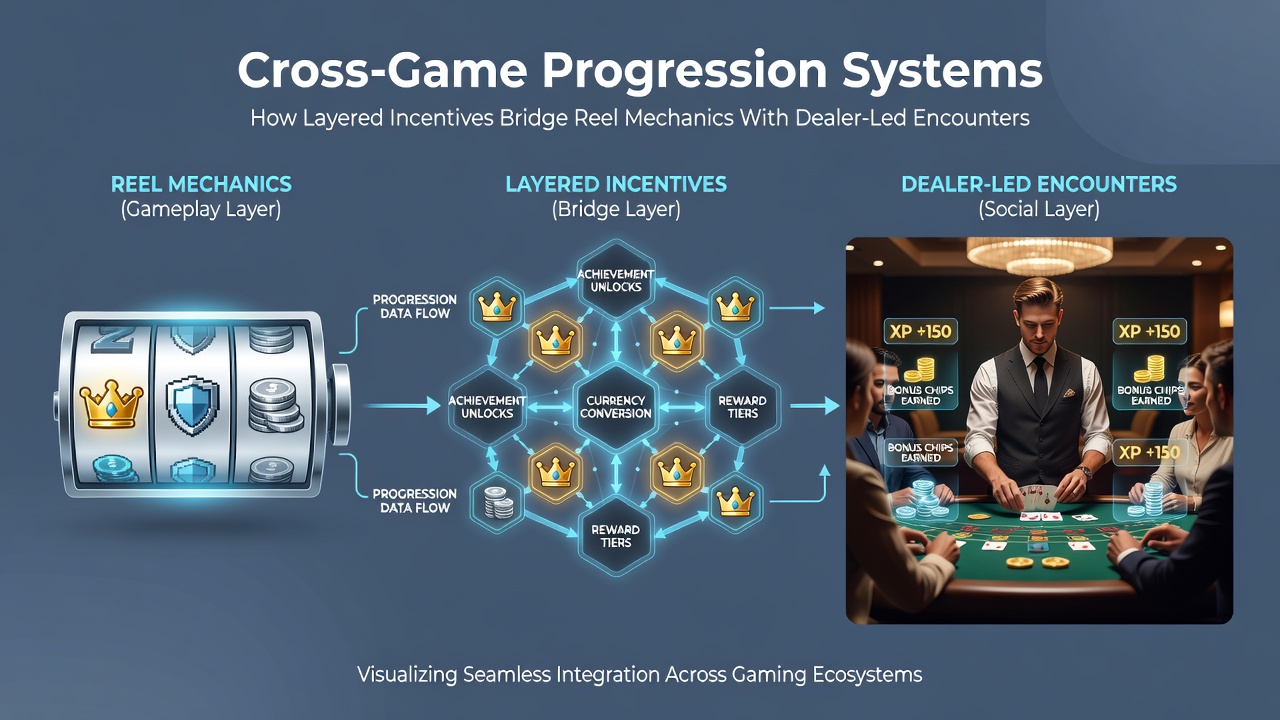
Access routes remain flexible through API integrations that sync player data across applications and devices. Mobile users enter via push notifications tied to ongoing progression goals, while desktop sessions offer dashboard views of transferable incentives. In June 2026 several operators updated these routes to include instant tier adjustments during live events, allowing real-time conversion of reel achievements into dealer table credits without logout cycles.
According to information released by the Nevada Gaming Control Board, platforms reporting cross-format progression activity experienced measurable increases in cross-category play during the first half of 2026. These updates align with broader infrastructure changes that prioritize seamless data transfer between chance and strategy modules.
Implementation Patterns Across Platforms
Implementation varies by region yet follows consistent patterns. Systems log reel outcomes as standardized units that dealer interfaces recognize upon session start. Live tables then reference the same unit pool to apply dynamic rules such as adjusted minimum bets or bonus trigger frequencies. This shared ledger approach ensures continuity even when players alternate rapidly between formats.
Industry reports compiled by the Australian Gambling Research Centre document similar synchronization methods in markets where mobile participation dominates. The reports highlight that flexible routes reduce abandonment rates during transitions from automated reels to interactive dealer streams.
Conclusion
Cross-game progression systems continue to evolve through layered incentives that maintain value across reel mechanics and dealer-led encounters. Flexible access routes enable players to engage at multiple points while preserving accumulated progress. Data collected through mid-2026 indicates sustained adoption of these frameworks as operators refine synchronization tools and regulatory bodies track resulting engagement patterns. The structure supports extended participation by keeping rewards portable between distinct game categories.