Patterns Linking Escalating Reward Tiers to Cross-Format Participation in Portable Entertainment Systems
Viktor Griffin · Jul 15, 2026
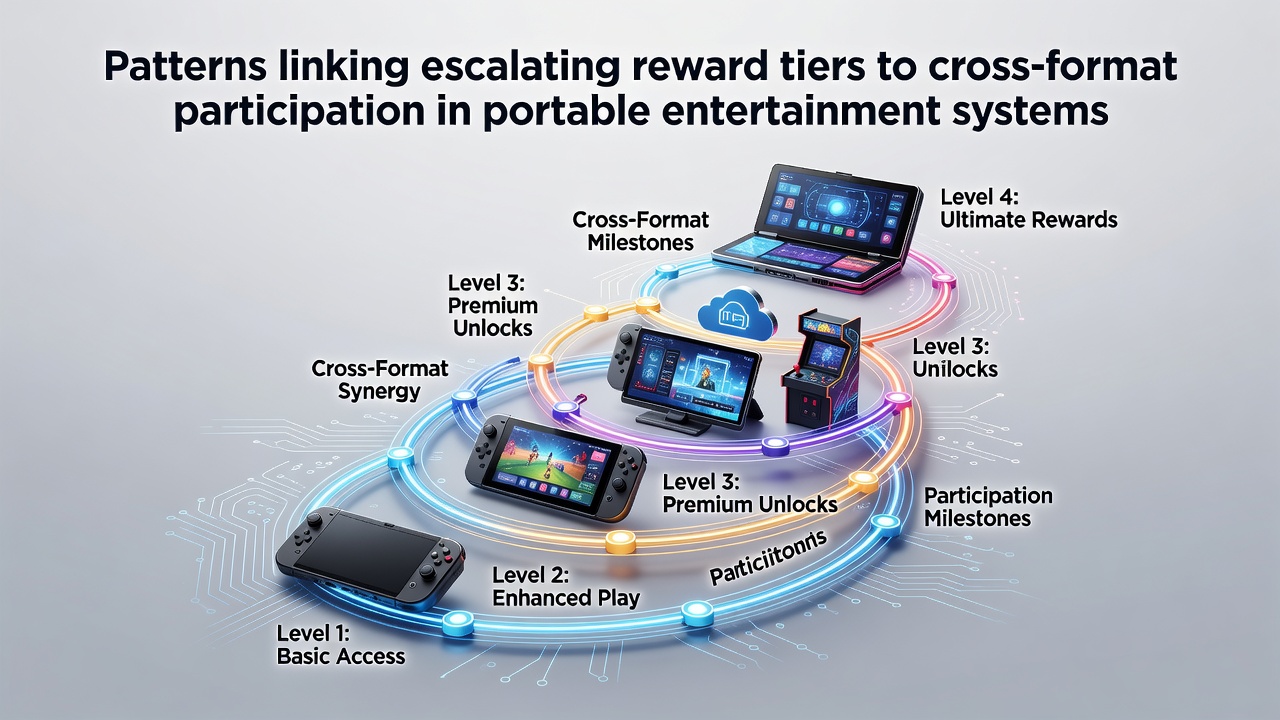
Patterns Linking Escalating Reward Tiers to Cross-Format Participation in Portable Entertainment Systems
Portable entertainment systems have expanded rapidly since the early 2020s, and data from industry trackers shows clear connections between structured reward escalations and user movement across device formats. Researchers tracking participation metrics note that users who advance through multiple reward levels tend to engage with content on smartphones, tablets, and handheld consoles within the same ecosystem, creating measurable cross-format loops.
Defining Reward Tiers in Portable Contexts
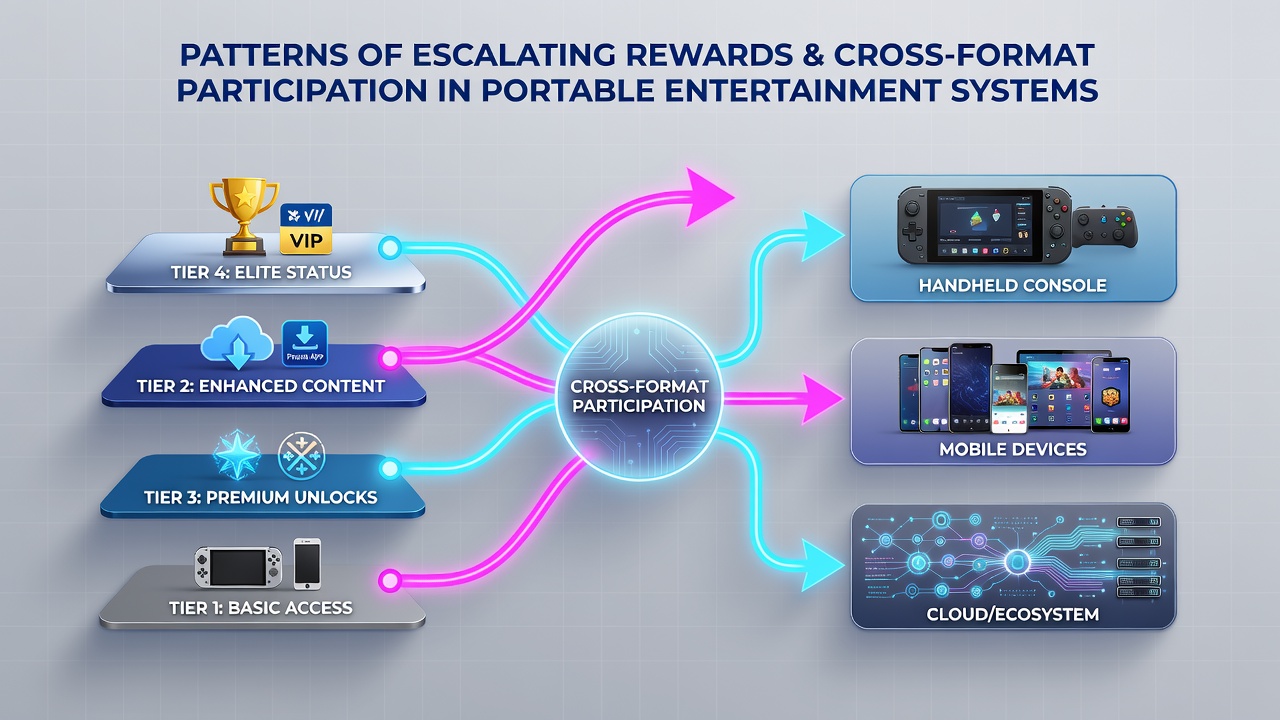
Reward tiers function as progressive achievement layers where users unlock benefits after meeting activity thresholds such as playtime milestones, content completion, or social interactions. In portable environments these tiers often span applications that sync progress automatically, allowing a player who reaches level three on a mobile title to carry forward certain advantages when switching to a dedicated handheld console. Studies conducted by academic groups have documented this synchronization increasing overall session frequency across formats by measurable percentages during 2025 and into mid-2026.
Observed Linkages Between Tier Advancement and Device Switching
Patterns emerge when analysts examine user journeys over multi-month periods. Those who climb reward ladders show higher rates of trying companion experiences on alternate devices, whether that means moving from a phone-based strategy game to its console counterpart or accessing the same franchise through a tablet application. Evidence from platform analytics indicates that the incentive structure itself encourages these shifts, because higher tiers frequently include format-specific bonuses that only become available after initial participation on one device type. July 2026 figures from several major developers revealed that users holding top-tier status accounted for disproportionate shares of cross-device logins compared with lower-tier cohorts.
Data Patterns from Recent Tracking Reports
Industry organizations such as the Entertainment Software Association have compiled participation statistics showing that reward-driven migration between portable formats accelerated during the first half of 2026. Observers note that systems offering escalating benefits tied to consistent multi-format activity recorded stronger retention curves than those limited to single-device rewards. The data further indicates that users crossing from mobile to dedicated portable hardware often cite unlocked customization options or priority access features as primary motivators.
Cross-Format Mechanics Driving Participation
Mechanics that support seamless progress transfer play a central role. Cloud saves, unified accounts, and shared achievement databases reduce friction, yet the reward tier component adds an additional pull. When a tier grants early access to events that rotate between device types, participants respond by maintaining activity across those devices to maintain their status. Analysts tracking these behaviors report that such mechanics correlate with extended overall engagement windows rather than isolated spikes on one format alone.
Regional Variations in Tier and Format Interactions
Patterns differ by region according to infrastructure and content availability. In markets where high-speed mobile networks predominate, users advance tiers more readily on phones before migrating to other portables for extended sessions. Reports from bodies such as the Interactive Games & Entertainment Association in Australia highlight similar dynamics, with tiered incentives linked to increased tablet usage among users already active on handheld consoles. These geographic differences underscore how local network conditions and device ownership rates shape the specific pathways users follow when climbing reward structures.
Implications for Platform Design and User Retention
Platform operators continue to refine tier structures based on observed cross-format data. Adjustments made in early 2026 focused on balancing reward density so that advancement feels attainable yet meaningful across device boundaries. Those adjustments produced measurable upticks in multi-device monthly active users within tracked cohorts. Researchers continue to examine whether these patterns hold steady as new hardware iterations enter the market and as content libraries expand across formats.
Conclusion
Patterns connecting escalating reward tiers to cross-format participation remain consistent across multiple datasets collected through 2026. Portable entertainment systems that integrate synchronized progress and tier-based incentives demonstrate higher rates of users engaging multiple device types within the same content ecosystem. Continued monitoring by industry groups and academic researchers will clarify how these dynamics evolve alongside hardware advancements and shifting user preferences.