Patterns of Incentive Accumulation Linking Automated Reels to Live Dealer Sessions Through Mobile Payment Pathways
Viktor Griffin · Jul 22, 2026

Patterns of Incentive Accumulation Linking Automated Reels to Live Dealer Sessions Through Mobile Payment Pathways
Patterns of incentive accumulation have emerged as central mechanisms in mobile gaming ecosystems where automated reel mechanics connect directly to interactive dealer rounds. These connections operate through adaptable payment routes that function on handheld devices, allowing users to move between chance-based reel sessions and strategy-oriented dealer interactions without resetting progress or losing accumulated benefits.
Core Mechanics of Reel-to-Dealer Linkages
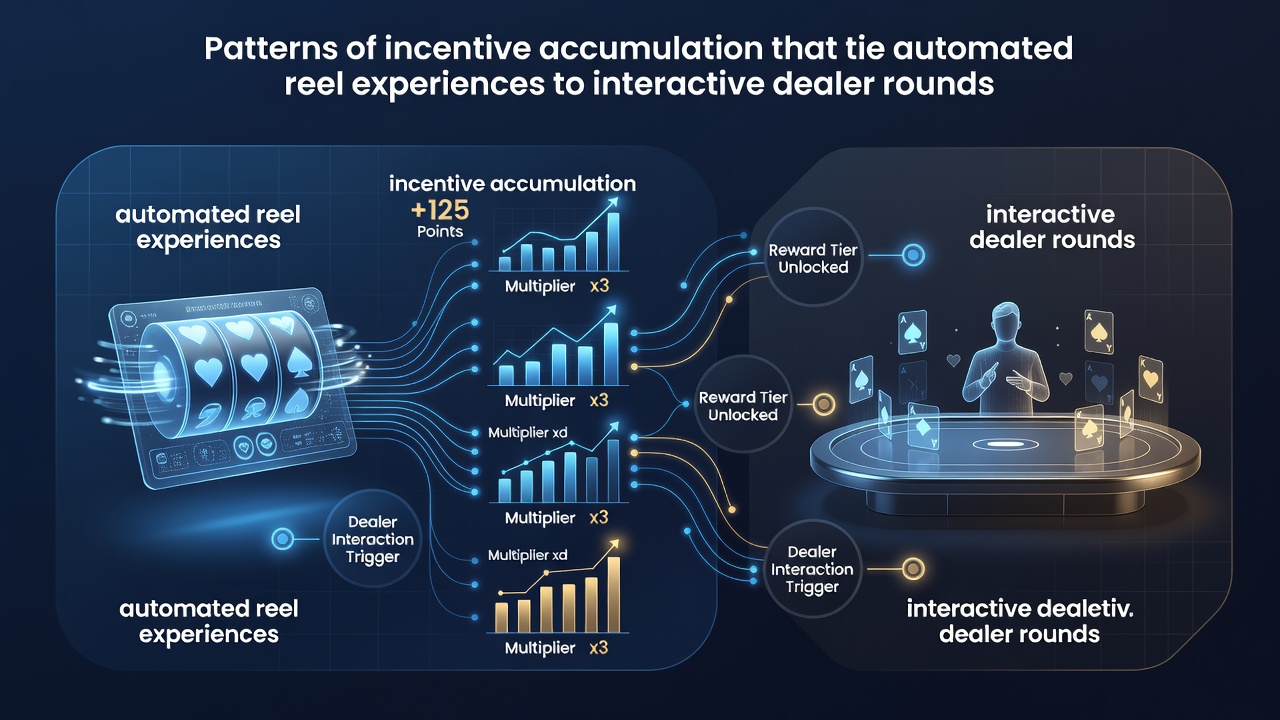
Data from industry tracking platforms shows that players who initiate sessions on automated reels often receive tiered multipliers that carry over when they transition into live dealer environments. Researchers at the University of Nevada, Reno documented how these multipliers activate after specific spin volumes, then apply to table game wagers once users switch platforms on the same device. The process relies on synchronized account ledgers that update in real time across both game types.
Payment adaptability plays a key role here. Flexible transaction channels such as instant bank transfers, digital wallets, and cryptocurrency options enable seamless funding adjustments mid-session. When a player completes a series of reel spins and decides to join a dealer round, the accumulated incentives adjust automatically based on the payment method selected for that transition.
July 2026 Data on Mobile Engagement Flows
July 2026 figures released by the New Jersey Division of Gaming Enforcement revealed that handheld device sessions involving both reel automation and live dealer elements increased by 18 percent compared with the previous quarter. Observers note that this growth correlates with payment systems that support cross-format incentive tracking, particularly those allowing users to maintain loyalty points while alternating between game categories on smartphones and tablets.
One study conducted across multiple North American operators found that users who employed adaptable payment routes accumulated rewards at a faster rate than those restricted to single-method funding. The patterns indicate that shorter transaction confirmation times on mobile networks directly influence how quickly incentives compound and transfer between automated and interactive formats.
Payment Route Adaptability and Incentive Layering
Adaptable payment routes function as bridges that maintain continuity across game types. When a handheld device processes a deposit or withdrawal, the system logs the transaction against both reel-based and dealer-led activity logs. This dual logging supports layered incentive structures where points earned on reels can unlock entry into higher-stakes dealer rounds without additional verification steps.
Analysts at the Australian Institute of Criminology examined similar systems in regulated markets and reported that devices with integrated biometric authentication experienced fewer interruptions during these transitions. The reduced friction allows incentive accumulation patterns to remain consistent, as players spend less time managing account details and more time engaging with the connected game formats.
Observed Accumulation Patterns Across Regions
Regional data highlights distinct yet overlapping patterns. In markets monitored by the Singapore Casino Regulatory Authority, mobile users demonstrated higher rates of incentive carryover when payment routes supported instant verification. European operators tracked through the European Gaming and Betting Association reported that cross-format rewards increased player session duration by measurable margins when handheld interfaces streamlined the switch from reels to dealer tables.
These patterns depend on backend algorithms that calculate incentive values based on combined activity metrics rather than isolated game performance. A player completing 50 automated reel spins may unlock a dealer round bonus that scales according to the payment amount and frequency used during the reel phase, creating a unified progression system visible only on mobile dashboards.
Conclusion
Patterns of incentive accumulation that connect automated reel experiences with interactive dealer rounds continue to evolve through adaptable payment routes on handheld devices. Current data from multiple regulatory and research bodies indicates that these linkages rely on real-time transaction logging, cross-format reward multipliers, and device-level authentication to maintain continuity. As mobile platforms refine these pathways, the measurable outcomes include extended engagement cycles and more integrated progression systems across chance and strategy elements.